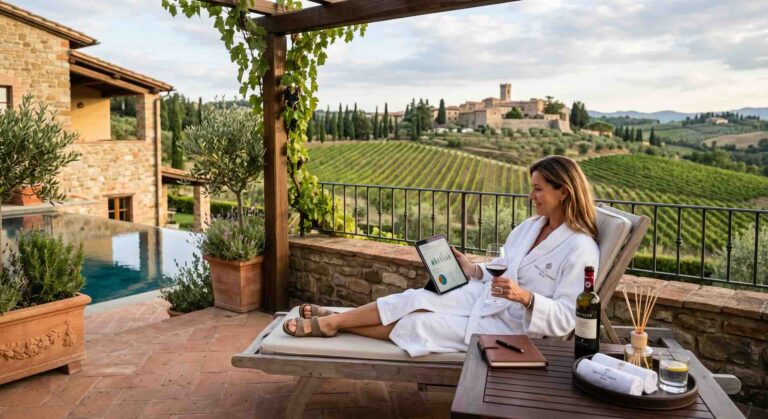

Before you begin searching for property in Italy, it’s essential to pause and clearly define what you’re truly looking for.
“A home in Italy” is far too vague. Without a precise definition, the search becomes scattered, drags on for months, and leads to unnecessary frustration.
At this stage, you define style, size, location, future use, and maintenance level—so every property you view is genuinely relevant.
- “A Home in Italy” Is a Dangerous Cliché
Many buyers start with a vague dream and quickly get lost in endless options.
Without a clear definition, every property seems “maybe right”—and nothing ever closes.
Clarity saves time, money, and emotional energy.
- Renovation Project vs. Move-In Ready
A renovation property may look inexpensive at first, but renovations are often costly, time-consuming, and complex.
A move-in ready home costs more upfront but offers immediate usability and certainty.
The right choice depends on your budget, available time, patience, and ability to manage a project remotely.
- Apartment vs. Private Home
An apartment in a town offers convenience, nearby services, and simpler maintenance.
A private home provides privacy, space, and a garden—but comes with higher ongoing costs and responsibilities.
This decision shapes both your lifestyle and long-term expenses.
- Farmhouse, Stone House, or Modern Villa
Each property type represents a different world:
- Historic stone houses offer charm and authenticity—but often come with outdated infrastructure and higher costs.
- Modern villas are comfortable, private, and ready to use—but may feel less traditionally “Italian.”
Choose between experience and practicality—trying to have both usually leads to compromise.
- A Clear Requirements List with Defined Flexibility
A list of 5–10 practical requirements (size, access, parking, outdoor space, property condition) keeps the search focused.
At the same time, define in advance which criteria are flexible and which are non-negotiable.
Without this clarity, every property looks suitable—and none truly are.
- The View
“A beautiful view” is subjective.
A lake view, sea view, mountain landscape, or open countryside each delivers a very different experience.
Define what kind of view you love—and how close you want to be to it.
- Property Use – Private Retreat or Hosting Others
If you plan to host family or friends, think about internal layout:
number of bedrooms, bathrooms, shared spaces, and privacy.
A couple’s holiday home is very different from a property designed for frequent hosting.
- Maintenance & Remote Management
Larger properties require gardening, cleaning, maintenance, and sometimes a management company.
That’s convenient—but expensive.
Smaller, low-maintenance properties are often better suited for remote ownership.
- Access to the Property
Access is not a minor detail.
A beautiful hilltop home without easy access by a standard vehicle quickly becomes a burden.
In many cases, road quality, parking, and accessibility matter just as much as the house itself.
- Future Upgrade Potential
Check in advance whether it’s possible to expand, add a pool, create parking, or build an additional room.
Upgrade potential affects both quality of use and future value.
A property with no flexibility may limit you down the road.
Finder Summary – Property Type
As a Finder, I help turn a general dream into a clear, practical property profile.
Instead of getting lost among farmhouses, stone homes, village apartments, or modern villas, I sharpen your real needs—so every property reviewed is relevant and every decision is based on true suitability, not momentary emotion.