Gourmet team building: food tours across Italy
Picture your team gathered around a floured wooden table in a Bolognese kitchen, the rhythmic thud of a knife cutting tagliatelle providing the soundtrack to a conversation that no conference room could have started. In corporate travel, the most productive settings often have no slides, no agenda, and no walls.
At Solo Italia Travel, we have spent over 28 years designing food-based experiences for corporate groups across all 20 Italian regions. What began as a niche offering has become one of the most requested formats in our MICE portfolio, because the results speak for themselves: teams that cook together, taste together, and argue over whether arancini is one word or two tend to leave Italy with something a strategy session cannot manufacture.
This guide covers eight regional itineraries, practical dietary accommodation planning, and answers to the questions we hear most from incentive travel planners.
Why food tours work for corporate team building
Food does something that structured workshops rarely manage: it removes hierarchy. When a CFO is elbow-deep in pasta dough alongside a junior analyst, the dynamic shifts. Shared manual tasks, kneading, rolling, tasting, adjusting, require communication and patience. Mistakes are visible, humor is inevitable, and the result is something everyone eats together.
Italian food culture reinforces this dynamic in a specific way. Every regional dish carries rules, history, and local pride. Learning why carbonara contains no cream, or why Parmigiano Reggiano requires 24 months of aging, invites curiosity and respect for craft, values that translate directly to professional culture.
Beyond the psychological dimension, the logistics work in favor of MICE planners. Italy’s culinary infrastructure is built around small producers, family-run kitchens, and intimate venues, settings that naturally accommodate groups of 8 to 50 without losing the sense of exclusivity that executive programs require.
What makes Italy the right destination for culinary team building
Italy’s food system is genuinely regional, not just nominally so. Each of the country’s 20 regions protects its culinary identity through DOP and IGP designations, meaning that Parma ham and Parmigiano Reggiano can only be produced in specific areas, under specific conditions. This geographic authenticity gives corporate programs a narrative structure that is hard to replicate elsewhere.
From a MICE infrastructure standpoint, Italy is one of Europe’s most developed markets, with well-established networks of private venues, executive chefs available for private hire, and logistics providers experienced with high-expectation groups. Whether your team is flying into Milan, Rome, or Palermo, the supply chain for a premium culinary experience is already in place.
8 Regional destinations for corporate food tours
1. Emilia Romagna: The heartland of Italian gastronomy
Region: North-Central Italy | Gateway cities: Bologna, Parma, Modena
Must try: Tagliatelle al Ragù Bolognese · Parmigiano Reggiano (24–48 months) · Aceto Emilia Romagna is where corporate food tours tend to perform best. The region’s culinary culture is built around producers, not restaurants, and that distinction shapes what a program here actually looks like.
Bologna’s historic Quadrilatero market is a reliable opening morning. It is a covered network of specialty shops that has operated continuously since the Middle Ages, and walking it with a guide who knows the vendors personally is a different experience from walking it alone. Teams taste before they fully understand what they are tasting, which tends to generate more honest reactions.
From Bologna, we arrange private visits to caseifici (Parmigiano producers) and acetaie (traditional balsamic vinegar producers). A vertical tasting of aceto balsamico tradizionale, comparing 12-year and 25-year aged versions, is one of the more quietly memorable activities in our MICE portfolio. The producers are not tourist operations. Access is built on relationships that take years to establish.
Modena and Parma are both feasible as day trips from Bologna. Each city has a distinct culinary identity, and combining all three within a three-day program gives groups a complete picture of what Italy’s most decorated food region actually produces.

2. Tuscany: wine, truffles, and renaissance tables
Region: Central Italy | Gateway cities: Florence, Siena, San Gimignano
Must try: Ribollita · Bistecca alla Fiorentina · Pecorino Toscano · Tartufo nero (seasonal) · Pappa al pomodoro
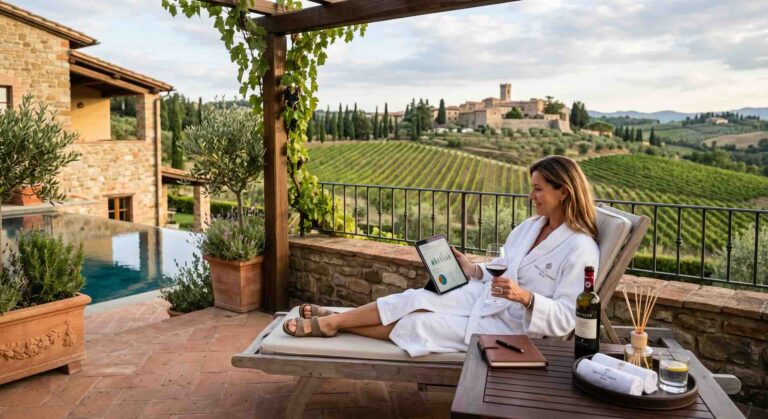
Florence works well for groups that want culinary programming alongside cultural content. A morning at the Mercato Centrale, working with a chef to select ingredients for an afternoon cooking session, pairs naturally with a visit to a Chianti estate cellar. The two activities complement each other rather than compete.
Tuscan cuisine also handles dietary diversity better than most Italian regional traditions. Ribollita and Pappa al pomodoro come from the cucina povera tradition: vegetable-based, filling, and naturally adaptable. A kitchen that cooks Tuscan food well can accommodate vegetarian and vegan guests without building a separate menu from scratch.
For multi-day programs, Tuscany absorbs a residency format easily. Florence is large enough to anchor structured sessions and close enough to Chianti, Montalcino, and the Maremma to offer genuine contrast on day trips. Groups that need time to decompress between agenda items generally find the Tuscan countryside does that job effectively.
3. Rome and Lazio: street food, trattorias, and jewish culinary heritage
Region: Central Italy | City: Rome
Must try: Cacio e pepe · Carbonara · Carciofi alla giudia · Saltimbocca alla romana · Maritozzo · Supplì
Rome works best on foot. A structured food tour through Trastevere, the Jewish Ghetto, and the Campo de’ Fiori covers several centuries of culinary influence in a few hours, and the neighborhood transitions are legible enough that participants understand where they are and why the food changes.
The Jewish Ghetto section is particularly relevant for groups with kosher requirements (see the dietary section below) and for anyone interested in how external cultures have shaped Roman cuisine over time. Carciofi alla giudia, the Jewish-Roman preparation of deep-fried artichoke, is one of the oldest dishes in the city and one of the most consistently impressive.
For groups that want a cooking component, a private session focused on Carbonara technique generates more discussion than most activities. The dish has three ingredients and a specific method, and the gap between knowing the method and executing it correctly is larger than participants expect. Rome also works well as the opening city in a multi-stop itinerary. Its pace and energy are accessible enough to break the ice before the program moves into quieter territory.
4. Naples and Campania: pizza, seafood, and the vesuvian table
Region: Southern Italy | Gateway city: Naples
Must try: Pizza napoletana · Pizza al portafoglio · Pizza fritta · Mozzarella di Bufala DOP · Spaghetti alle vongole · Sfogliatella · Pastiera
Naples is the most misread stop on a corporate food tour itinerary. Groups arrive expecting disorder and find precision instead. A Neapolitan pizzaiolo manages a wood-fired oven at 485°C and works to tolerances that most manufacturing professionals recognize immediately.
A private session with a maestro pizzaiolo covers hydration ratios, folding technique, and a bake window of 60 to 90 seconds. The skill gap between participants is obvious from the first attempt and irrelevant by the end of the session. That dynamic, visible difference in starting ability, rapid shared learning, is one of the more effective formats we run for leadership groups.
The Mozzarella di Bufala DOP produced in the Campania hinterlands is worth a dedicated morning. Visiting a working buffalo farm and dairy, watching the cheese pulled by hand, and tasting it within hours of production is a straightforward demonstration of what a protected designation of origin actually means in practice.
For a second day, the program moves south to the Amalfi Coast. The shift from Naples to the coast is deliberate: the contrast between the city and the clifftop villages gives participants the kind of reset that keeps a multi-day program from feeling uniform.

5. Venice and the Veneto: bacari, lagoon seafood, and the art of cicchetti
Region: Northeast Italy | City: Venice and the lagoon islands
Must try: Cicchetti (bacaro culture) · Sarde in saor · Baccalà mantecato · Risotto di Gò · Seppia in nero · Tiramisu · Spritz Veneziano
Venice requires a different pace than Rome or Naples, and that is its advantage for certain group profiles. The city’s bacaro culture (small, standing wine bars serving cicchetti) structures a food tour around movement and short stops, which works well for groups who find formal seated dinners too static.
A private bacaro crawl through Cannaregio or Castello covers six to eight stops over three hours, with each stop framed around a specific pairing or preparation. The logistical constraint of Venice (no cars, everything on foot or by boat) strips away the usual executive infrastructure and puts people on equal footing.
The Rialto fish market, best visited at 7am, is one of the most compelling market experiences in Italy, and one of the most useful for understanding lagoon ecology. A private chef accompanies the group to explain the morning’s selection before leading a cooking session focused on Sarde in saor or Baccalà mantecato.
A note on Tiramisu: the dessert’s origin is genuinely contested between Veneto and Friuli-Venezia Giulia. Rather than settling the debate, we find it makes for a productive conversation at the end of a long day.
6. Piedmont: truffles, Barolo, and quiet prestige
Region: Northwest Italy | Gateway cities: Turin, Alba, Asti
Must try: Tartufo bianco d’Alba (autumn) · Tajarin · Bagna cauda · Vitello tonnato · Gianduja chocolate
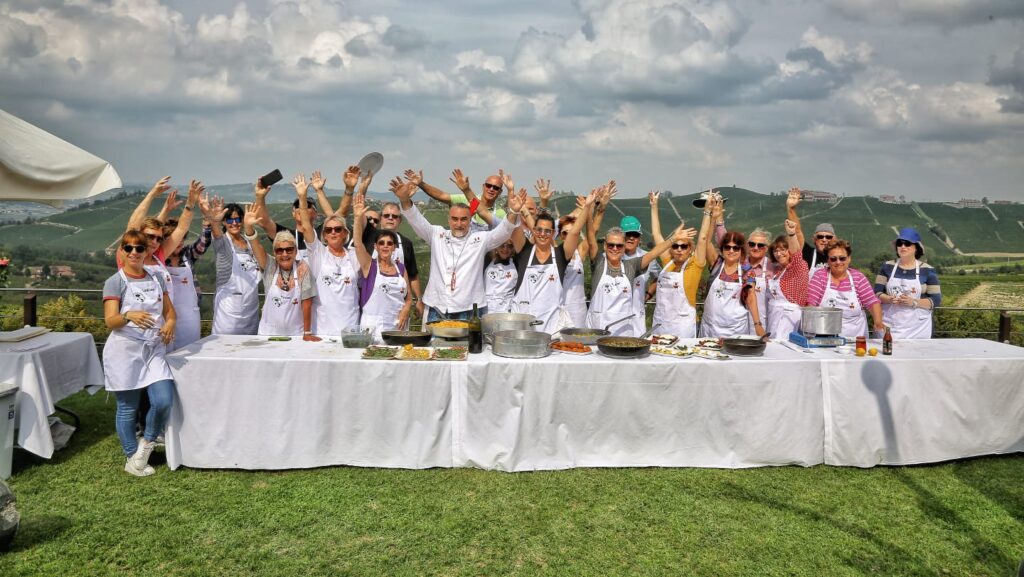
Piedmont attracts a specific type of group: those who know what they are looking for and want access, not volume. The region’s culinary identity is built on restraint; the best dishes here, like Tajarin with truffle shavings or Bagna cauda served in winter, require quality ingredients and correct technique rather than complexity.
The White Truffle season (October–November) centered on Alba is the most requested period for Piedmont programs. Truffle hunting with a private trifolau and his dog, followed by a tasting menu in a Langhe farmhouse, is the format that works. Wine programming runs alongside naturally: Barolo and Barbaresco estates in the Langhe offer private cellar access that is unavailable to the general public.
Turin itself is underused as a base for corporate programs. The city has serious restaurant culture, world-class chocolate heritage (gianduja was invented here), and the architecture of a former capital.
7. Liguria: pesto, focaccia, and the Italian riviera
Region: Northwest coastal | Gateway: Genoa, Cinque Terre, Recco
Must try: Pesto genovese (mortar and pestle) · Focaccia di Recco col formaggio · Trofie al pesto · Branzino al forno · Pandolce
Liguria works best as a two-day add-on to a northern Italy program, or as a standalone for groups focused on herbs, coastal cuisine, and artisanal production. The region is defined by verticality: terraced hillsides planted with basil, olive trees, and citrus descend straight into the sea. That geography explains the cuisine more than any food history book.
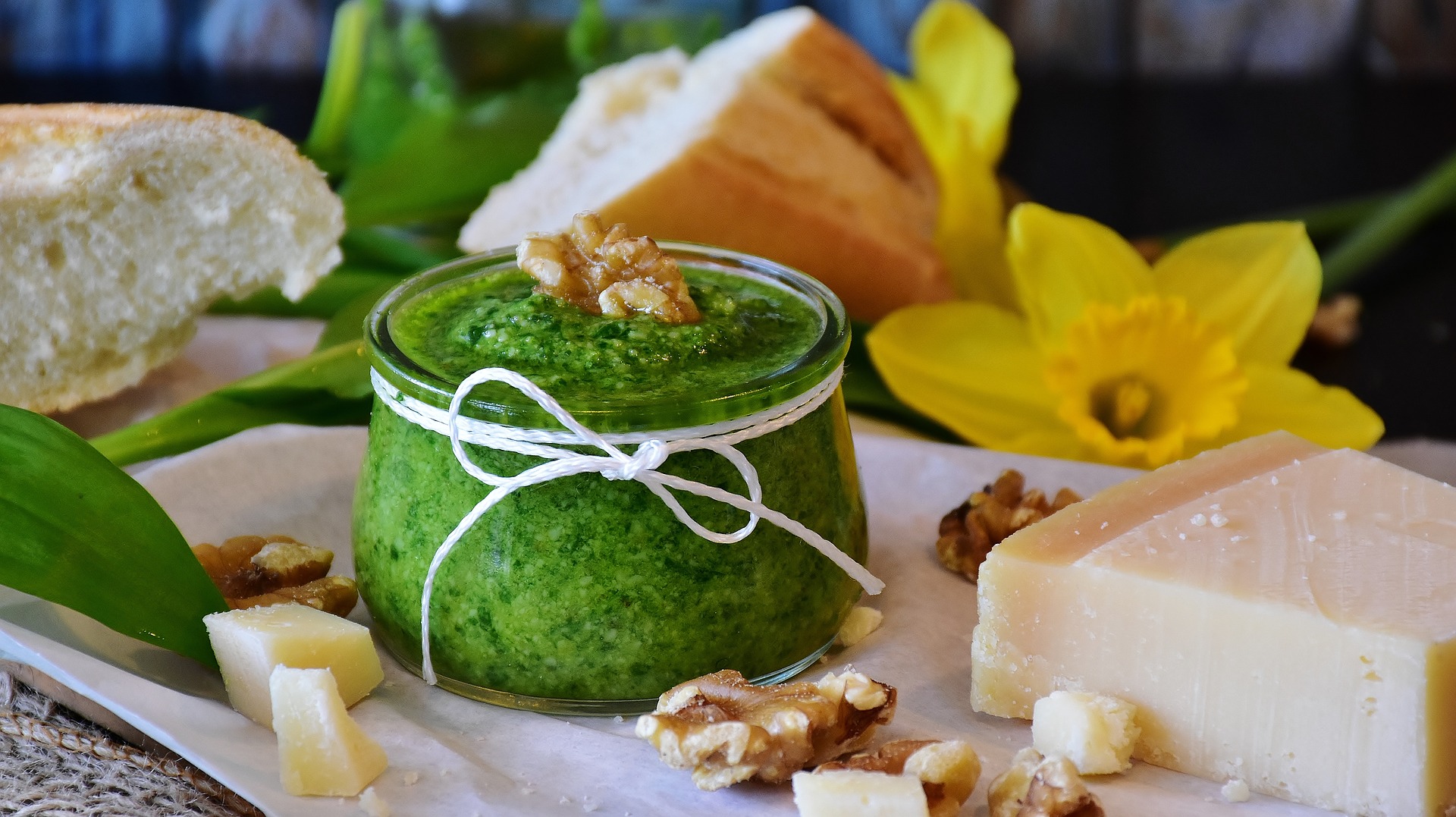
A pesto-making workshop in a Genoese home kitchen is our most requested Ligurian activity. Participants use a traditional marble mortar and pestle, work through a specific sequence of ingredients, and discover quickly that skipping a step ruins the emulsion. The lesson is obvious without anyone having to say it.
For the Cinque Terre, a private boat connects the villages faster and more comfortably than the train, and stops for focaccia, anchovies, and local wine happen on a schedule the group controls.
8. Sicily: markets, palazzos, and Mediterranean depth
Region: Southern island | Gateway cities: Palermo, Catania, Trapani
Must try: Arancini (or arancine — the debate is real) · Pasta alla Norma · Sfincione · Caponata · Granita con brioche · Cannoli siciliani · Sarde a beccafico
Sicily is the most historically layered culinary destination in Italy. Arabic, Norman, Spanish, and Greek influences are visible in the same dish, sometimes in the same ingredient list, and understanding that history changes how food tastes. For corporate groups that engage with complexity well, it is the most intellectually interesting stop on any Italian itinerary.
Palermo’s Ballarò and Vucciria markets are louder and more disorienting than anything in northern Italy. The volume of vendors, the variety of produce, and the pace of transactions are designed to overwhelm. Walking a group through that environment with a guide who can narrate it in real time is one of the more effective activities we run, not because it is comfortable, but because it requires active attention.
Private cooking workshops in Palermo’s historic palazzi provide the contrast. Moving from market to aristocratic kitchen in the same afternoon, learning Caponata or Sarde a beccafico from a local chef, gives the day a structure that participants remember clearly.
The arancini versus arancine debate, Palermo uses the feminine and Catania the masculine, is worth raising at the beginning of any Sicilian program. It signals immediately that food here is taken personally, and that context makes everything that follows more interesting.
Dietary accommodations for corporate food tours
One of the most common planning challenges for MICE groups is managing dietary requirements without reducing the quality of the experience for everyone. The tables below are working reference guides for three cities.
Vegetarian and Vegan options: Rome
Dietary Preference | Traditional Dish | Adapted Option | Where to Source |
Vegetarian | Carbonara (guanciale) | Cacio e pepe | Traditional Roman trattoria |
Vegetarian | Cacio e pepe (possible lard risk) | Carciofi alla Romana, Cavolfiore fritto | Cicchetti bars and produce markets |
Vegan | Carbonara-style dishes | Pasta aglio e olio; tomato-based pasta (advance request) | Trattoria (pre-coordinated) |
Vegan | Carciofi alla Romana (butter/lard) | Carciofi alla Giudia (olive oil fried) | Rome Jewish Ghetto |
Pescatarian | Meat-focused menus | Spaghetti alle vongole; Branzino al forno | Fish-forward venues |
Gluten-Free options: Florence
Florence is easier to navigate gluten-free than most Italian cities, because several flagship dishes — Bistecca alla Fiorentina, aged Pecorino, Chianti — require no adaptation.
Item | Challenge | Gluten-Free Solution | Sourcing |
Pasta dishes | Wheat-based | GF pasta (advance request) | Pre-coordinated restaurant stop |
Ribollita / Pappa al pomodoro | Bread-thickened | GF bread version | Pre-tour chef coordination |
Panini | Regular bread | GF bread or no-bread alternative | Mercato Centrale (pre-identified vendors) |
Bistecca alla Fiorentina | None — naturally GF | No modification needed | Any trattoria |
Pecorino Toscano + local wine | Generally GF | No modification needed | Enoteca or caseificio tasting |
Kosher and Halal modifications: Rome
Rome’s Jewish Ghetto is one of the few neighborhoods in Italy where a kosher-compliant food tour requires minimal compromise, because the local cuisine already reflects Jewish culinary traditions.
Traditional Dish | Challenge | Kosher Solution | Venue |
Cacio e pepe | Cheese must be certified | Kosher cheese or skip | Kosher restaurants in the Ghetto |
Carbonara | Guanciale (pork) | Kosher salmon or vegetable-based pasta | Pre-coordinated kosher-certified venue |
Carciofi | Lard risk in some preparations | Carciofi alla Giudia (olive oil — traditional Jewish Roman version) | Sora Margherita or Bariccella |
Cicchetti | Salumi / non-certified fish | Vegetable crostini, olives, verified cheeses | Ghetto area vendors |
Gelato | Certification required | Kosher-certified gelato | Fior di Luna (Ghetto) |
Frequently Asked Questions
What are the best food tours in Italy for corporate groups?
It depends on your program’s primary objective. For producer access and culinary depth, Emilia Romagna is the strongest choice. For high-energy urban walking tours that work with large groups, Rome is the most logistically reliable. For wine education paired with landscape, Tuscany or Piedmont are the natural fits.
Which region should I choose for a corporate food tour?
A single-region program gives teams genuine immersion, three days in Bologna, for example, is enough time to understand the culinary logic of an entire food culture. Multi-city itineraries (Rome – Florence – Bologna is the most common) work well when the group includes participants from different backgrounds who benefit from contrast.
How large a group can a culinary team building program accommodate?
Most of our culinary programs are designed for groups of 8 to 50. Above 30 participants, we typically split into parallel workshops and reconvene for the meal. For incentive programs above 50, we coordinate with partner venues that have larger kitchen facilities without sacrificing the private, non-tourist feel.
Is it better to do a food tour in Rome or Florence?
Rome moves faster and rewards curiosity, it is better suited to groups that want energy, variety, and street food. Florence is more deliberate, with a focus on wine culture, market produce, and countryside programming. For a multi-city program, both work in sequence.
What Italian city is considered the culinary capital?
Bologna has held the unofficial title La Grassa (“The Fat One”) for centuries, and for food professionals it remains the benchmark. That said, Alba (truffles), Parma (cured meats and aged cheese), and Palermo (street food and market culture) are equally defensible choices depending on what you are measuring.
What dishes should every Italy food tour include?
Any serious itinerary should include: Carbonara in Rome, Tagliatelle al Ragù in Bologna, Pizza Napoletana in Naples, and Bistecca alla Fiorentina in Florence. These four dishes give participants a working map of Italian regional identity.
How far in advance should we book a corporate food tour in Italy?
For standard programs of 8–20 participants, three to four months is sufficient. For incentive programs of 30 or more, particularly those requiring private producer access, exclusive venue buyouts, or White Truffle season dates in Piedmont, we recommend starting the planning process six to nine months in advance.
Are private food tours worth the additional cost compared to group options?
For corporate programs, private access is not a luxury, it is a functional requirement. Public tours are designed for general audiences and move at a pace and depth that does not serve executive groups. Private arrangements allow us to customize the pace, the dietary accommodations, the narrative, and the access level to fit your specific team.